

Published on: 04 November 2026
Last updated on: 04 November 2026
Perforated sheet metal: 7 applications where the holes do the work
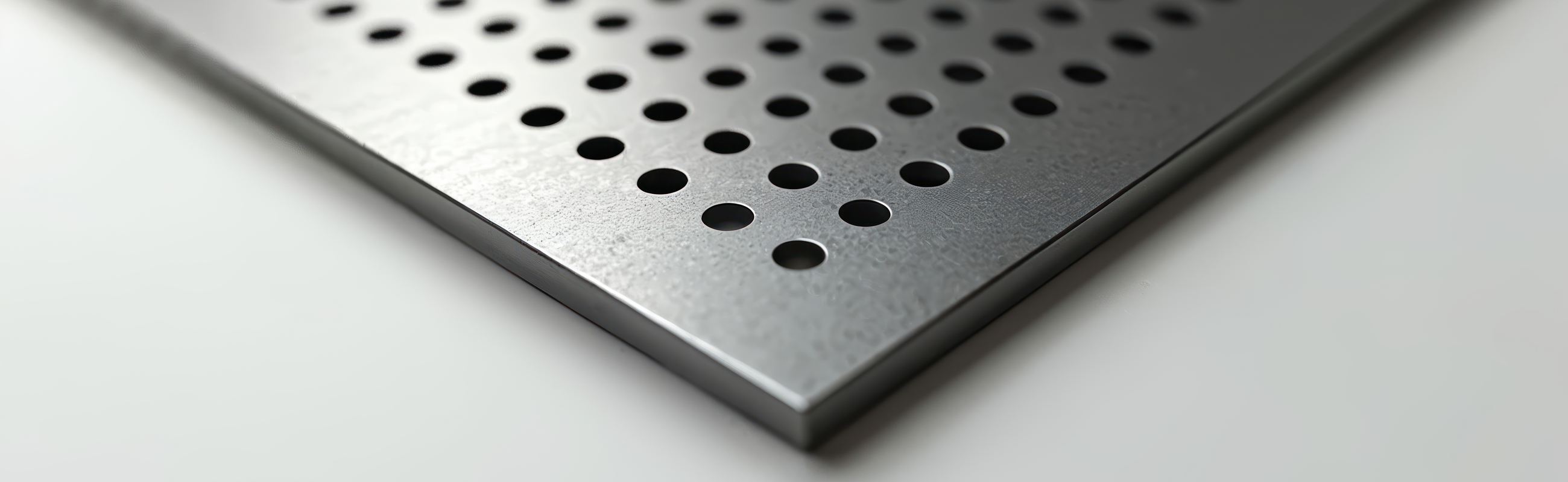
Perforated sheet metal is sheet metal with a fixed pattern of round, square or slotted holes. It lets air, light, sound and liquid through, but keeps fingers, dirt and material out. That is why you find it in machine guards, enclosures, sound enclosures, screens, balustrades and facades. How much gets through depends on the open area: the ratio between hole size and pitch.
In this blog
- Reading perforated sheet codes: what does R8 T12 mean?
- 7 applications of perforated sheet metal
- Standard perforated sheet or your own hole pattern?
- 4 design tips for perforated parts
- Questions about perforated sheet metal?
Reading perforated sheet codes: what does R8 T12 mean?
R8 T12 means round holes of 8 mm in a triangular pattern (60°), with a pitch of 12 mm. That gives an open area of about 40 percent.
Perforations are described with a short code based on ISO 7806. This is how to read R8 T12:
| Part of the code | What it means | In R8 T12 |
|---|---|---|
| First letter | Hole shape | R = round |
| First number | Hole size (w): size of the hole in mm | 8 = 8 mm hole |
| Second letter | How the holes are arranged relative to each other | T = each row shifts by half a hole (triangular pattern, 60°) |
| Second number | Pitch (p): distance from the centre of one hole to the centre of the next, in mm | 12 = 12 mm |
Three common codes side by side:
| Code | What it looks like | Open area | Formula to calculate open area |
|---|---|---|---|
| R8 T12 | Round holes, rows offset alternately (honeycomb pattern) | approx. 40% | 90.69 x w² / p² |
| R8 U12 | Round holes in straight rows and columns (grid) | approx. 35% | 78.5 x w² / p² |
| C10 U12 | Square holes in a straight grid | approx. 69% | 100 x w² / p² |
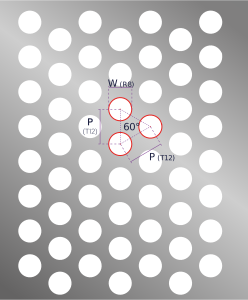
R8 T12
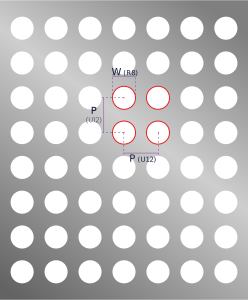
R8 U12
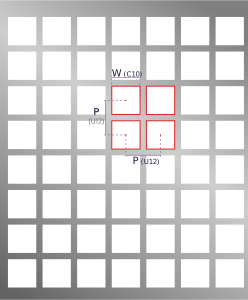
C10 U12
Open area determines how much air, light or liquid can pass through. The higher the percentage, the lighter and more open the sheet, but also the less rigid. If you design your own pattern, use the formulas in the table above to choose hole size and pitch.
There are also slots with round or square corners (LR, LC), diagonally placed square holes (CD) and staggered patterns (Z, K). You can draw those yourself as well.
7 applications of perforated sheet metal
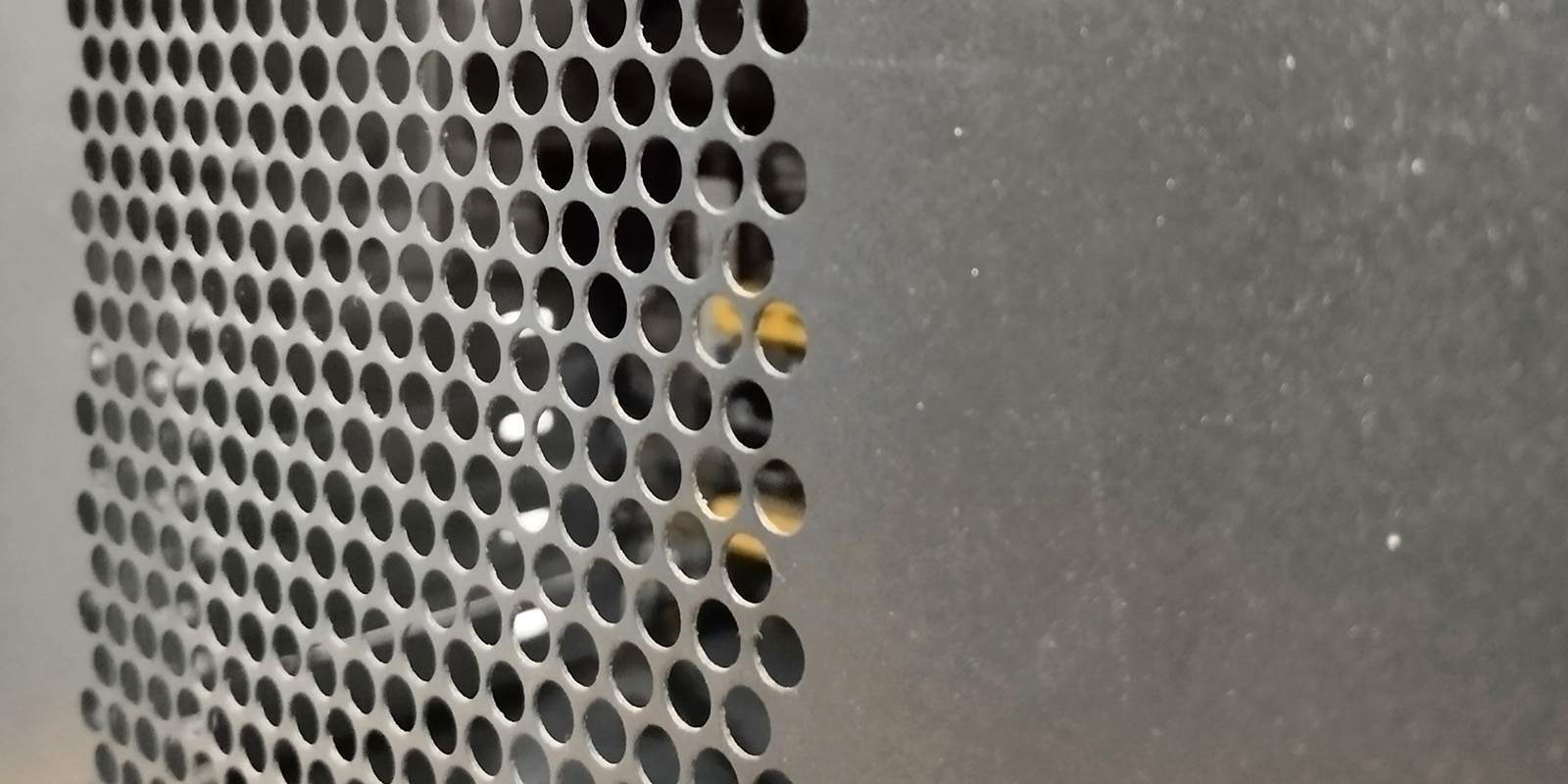
1. Cooling in enclosures
Switches, power supplies and controllers generate heat. A perforated mounting plate, door or side panel dissipates that heat without an extra fan, or with a smaller one. Leave a solid edge for stiffness and mounting holes.
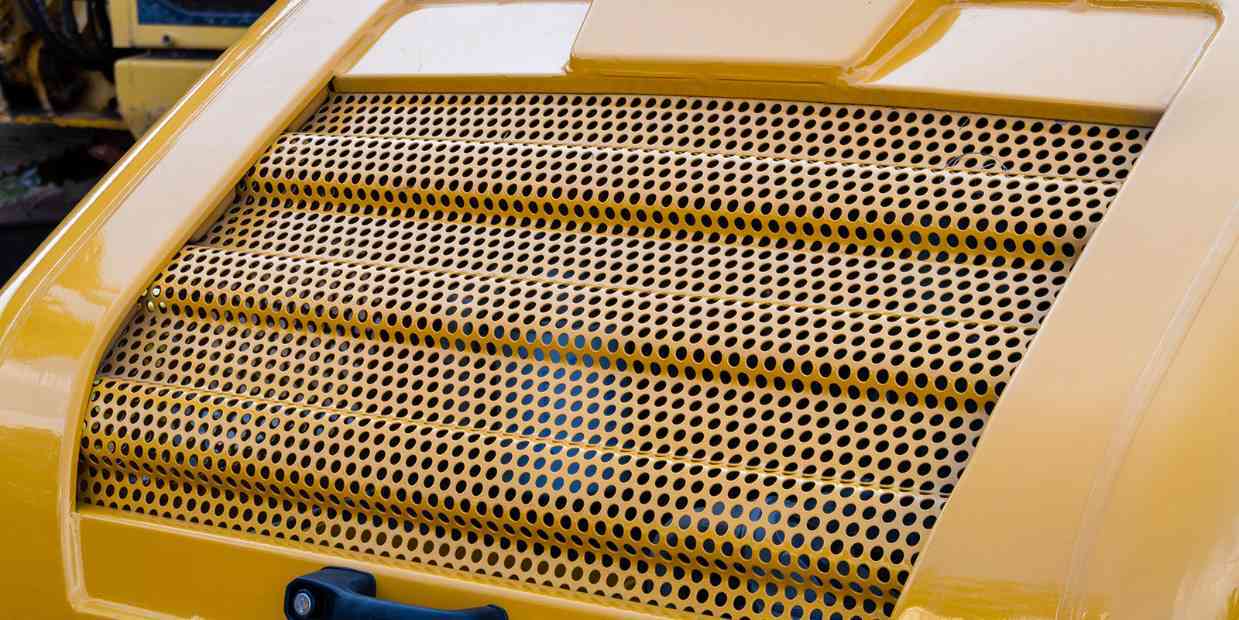
2. Machine guarding
You want to see the process and let air circulate, but nobody should be able to reach in. Match the hole size and the distance to hazardous parts to the safety distances in EN ISO 13857.
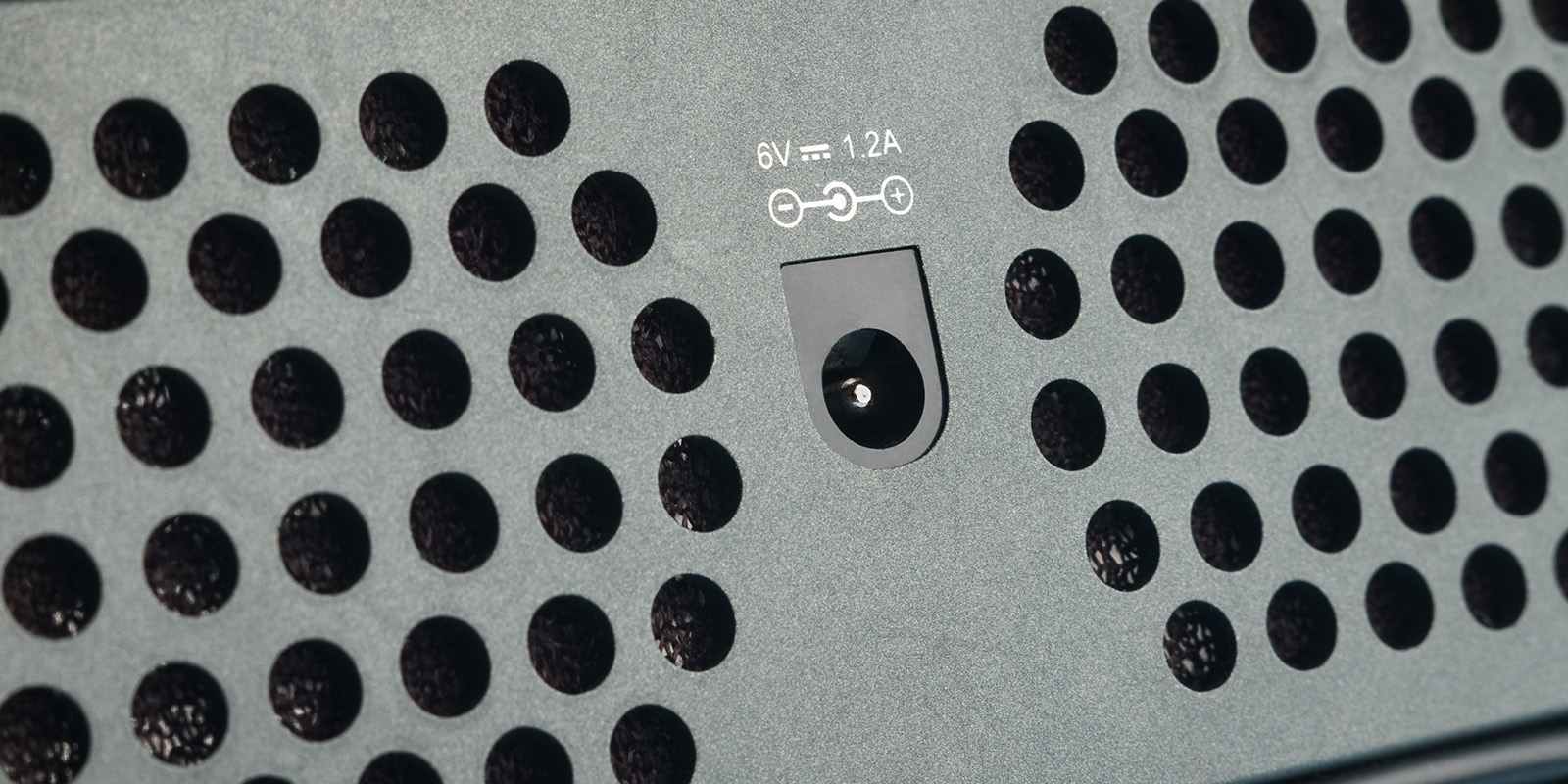
3. Acoustics
In sound enclosures and absorbing panels, perforated sheet protects the absorbing material behind it while sound passes straight through. The sheet does the mechanical work, the material behind it does the damping.
4. Screening, filtering and drainage
From a strainer basket in an industrial sink to a stool in a washroom with fast water drainage: the hole size determines what does and does not pass through. Choose stainless steel for water and cleaning agents.
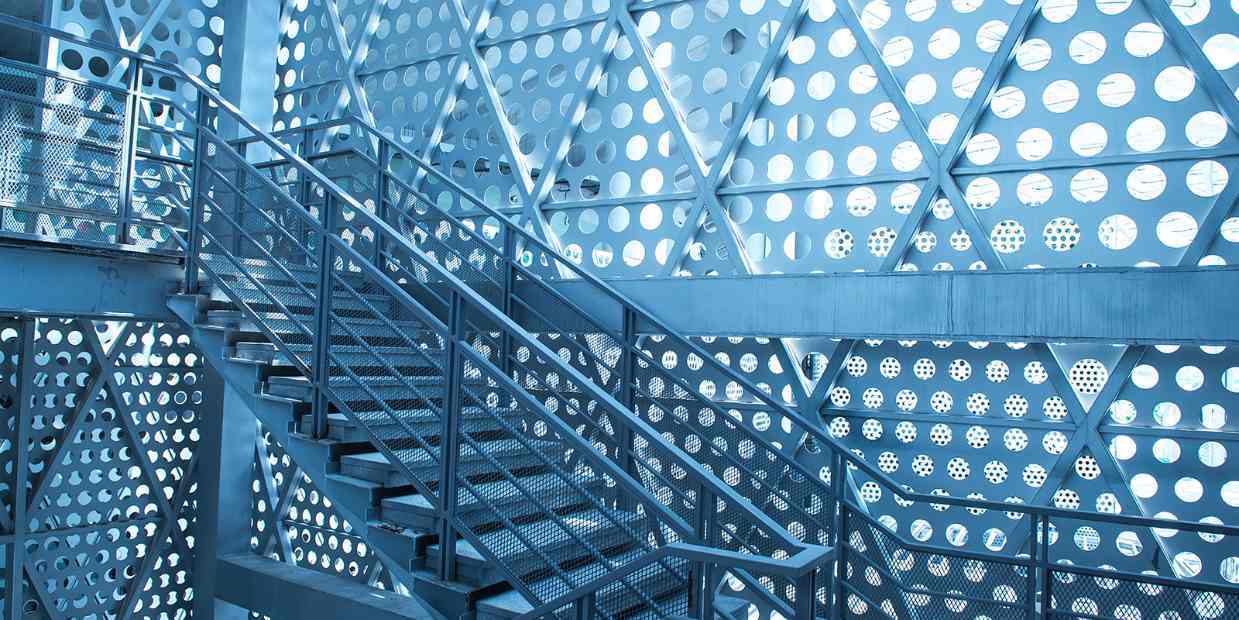
5. Railings and balustrades
Perforated infill panels in stairs, landings and bridges provide fall protection with visibility and daylight. A bent edge makes the panel stiffer and easier to mount.
6. Facades, sun shading and interiors
Here the pattern itself becomes the design. With your own hole pattern you can create transitions from solid to open, logos or text in a facade or ceiling panel.
7. Tool walls and storage systems
Workshops use sheet with system perforation to hang hooks, bins and holders flexibly. With your own pattern you tailor the wall to your own tools and layout.
Standard perforated sheet or your own hole pattern?
For large areas with small holes, standard perforated sheet is often cheaper. If you want solid bend lines, local perforation or your own design, have a hole pattern laser cut into solid sheet.
| Standard perforated sheet | Own hole pattern in solid sheet | |
|---|---|---|
| Pattern | Fixed pattern, usually with solid (blank) margins | Free: local, varying hole sizes, solid zones |
| Margins and bend lines | Blank margins of 5 to 30 mm; extra solid strips only on special order | You decide where it stays solid |
| Cost | Favourable for large areas with small holes | Favourable for local perforation; every hole adds cutting time |
| Material and thickness | Fixed combinations of material, thickness and pattern | Any sheet material and thickness in our range |
At 247TailorSteel you always take the second route: you draw the holes, we laser cut them into solid sheet.
4 design tips for perforated parts
- Start with the function. Airflow and cooling need a large open area, stiffness and safety need less.
- Keep margins and bend lines solid. Holes close to a bend line deform during bending. In the bend zone, the minimum flange length above and below the bend line, holes larger than 5 mm are not allowed. If there are too many holes, Sophia® shows a warning. Read how to prevent deformation of holes in the bend zone.
- Check hole size and bridge against sheet thickness. The bridge is the smallest distance between two holes. Holes that are too small or bridges that are too narrow cannot be produced. You will find the minimum dimensions per thickness in the guidelines for laser cutting.
- Draw every hole. A perforation code in a note or part name is not cut. If the holes are not in your file as contours, you get a solid sheet.
Tip: Draw your hole pattern directly in your DXF or STEP file and upload it to Sophia®. The manufacturability check immediately shows whether holes and bridges are feasible, and you get your price and delivery time right away.
Questions about perforated sheet metal?
Once you know what your sheet needs to do, hole size, pattern and material follow. Try it with your own design.
Upload your drawing in Sophia® and see your price instantly »
Frequently asked questions about perforated sheet metal
Can you bend perforated sheet metal?
Yes, but watch the bend zone: the minimum flange length above and below the bend line. Holes larger than 5 mm are not allowed there. If there are too many smaller holes, Sophia® shows warning 1504. You can accept it, but the holes may deform. With your own hole pattern you simply keep that strip solid.
How do I order a custom perforated sheet?
Draw all the holes yourself in your DXF, DWG or STEP file and select solid sheet as the material. The laser only cuts what is drawn: a perforation code in the part name or a note does not produce holes. Want a standard pattern such as R8 T12? Draw the holes with that hole size and pitch.
How much open area do I need?
That depends on the function. For ventilation and cooling you want as much open area as possible, for guarding and stiffness less. Check it with the formula for your pattern: R8 T12 gives about 40 percent, C10 U12 almost 70 percent. In doubt? Test it with a prototype first.
What determines the price of a laser-cut perforated sheet?
Mainly the number of holes. Every hole is an extra cutting contour and takes cutting time. Material, sheet thickness and size also count. To lower the price, choose larger holes with a larger pitch or only perforate where needed. That way you keep the same open area with less cutting.
Which material should you choose for perforated sheet in a wet environment?
Choose stainless steel or aluminium. Stainless steel 304 is sufficient for most indoor applications with water, such as kitchens and washrooms. With chlorides, such as salt water or chlorine-based cleaning agents, stainless steel 316 is the safer choice. Galvanised steel works well outdoors, but cut edges and hole walls no longer have a zinc layer after laser cutting. Want that protection anyway? Choose Magnelis®: its coating self-heals at the cut edges.